
Beat Planet Music

The Playstation is no stranger to the Rhythm genre. I mean, it kind of started the whole thing. You got Parappa, BeatMania, Pop n' Music, DDR, etc. All these cool, colorful games with that artstyle I love to go on about and would really love to see more people bring back in their own work. Recently, I have stumbled across another one of these games, called Beat Planet Music.
Beat Planet Music (BPM, if you didn't get the reference), is a release from 2000, by a company called Opus. Opus seems to be one of those small companies that make their own games, but are by and large a co-developer that brings up the rear for larger games. They have their prints on all sorts of games, working on obscure stuff like Brain Lord, Vixen 357, and Groove Jigoku V, as well as higher profile games like the Nintendo 64 Evangelion game, the pre-Yukes/pre-EA UFC titles, and even the recent SaGa: Emerald Beyond. Also, it should be pointed out that one of the sound programmers, Tomoo Yamaguchi, is responsible for the design of Flashman in Mega Man 2. So this is definitely a company that has been in the trenches over the years, and BPM is a game that appears as though Opus were able to cut loose and do their own thing with it.
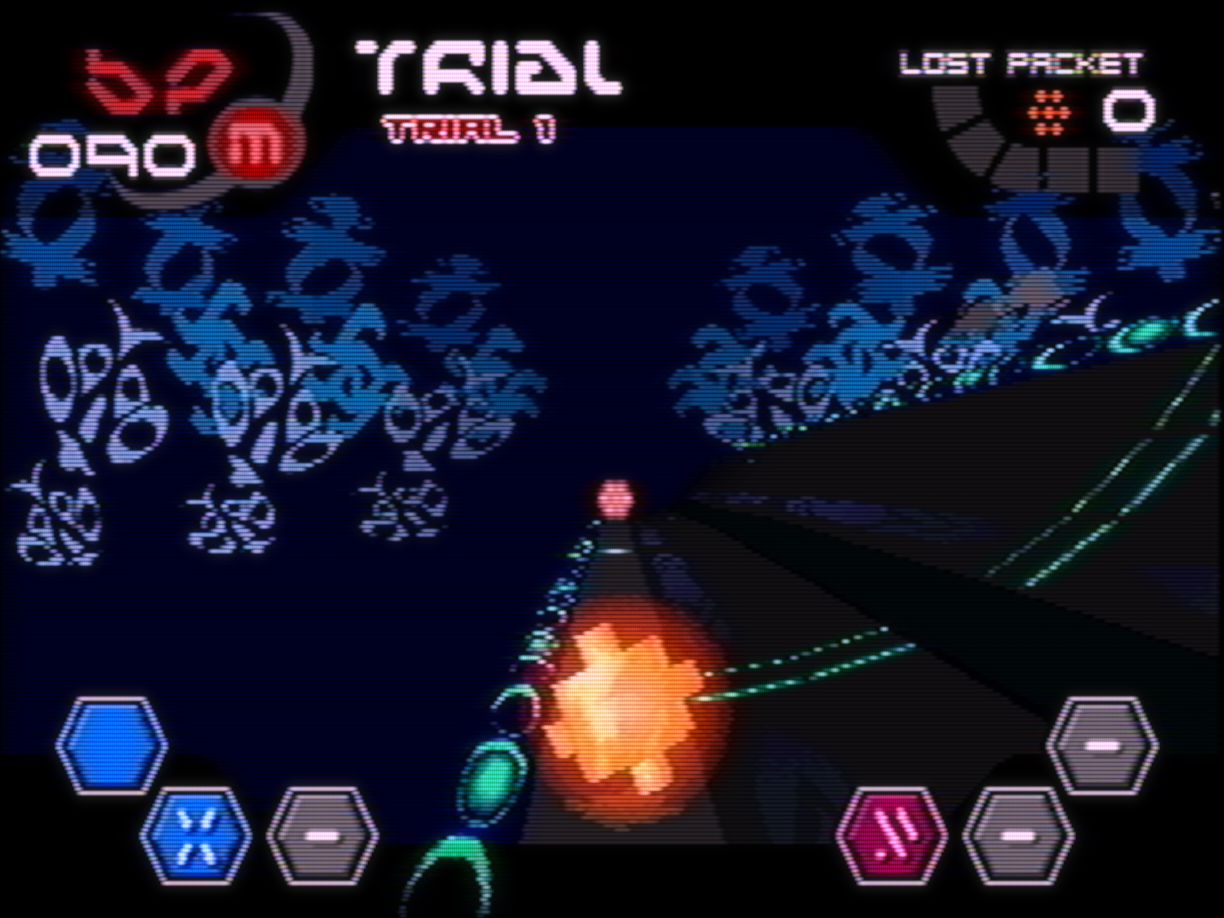
BPM, as a game, is pretty basic, especially compared to other games in the genre. You speed down a half-pipe, collecting data packets that represent a sound channel for a song. You go down one lane, pick up all the packets, then you move to the next lane and repeat until the level is over. Even on the hardest difficulty, there's no lane shifting or anything complex like that; difficulty only seems to change how long a stage is, and make it so that you aren't just fixed in a lane, making the half-pipe more like a road that you need to maintain control on. Each of these levels are in Terminals, kept throughout the world (Tokyo, New York, Kingston, Istanbul, etc). You play through two levels in a terminal, then you get to play a third one that acts as a method of tranportation to the next terminal. You start in Tokyo, and you do this until you've gone around the world and end up back in Tokyo. There are extra songs to unlock and play through after the credits roll, but that's it. That's the whole game.
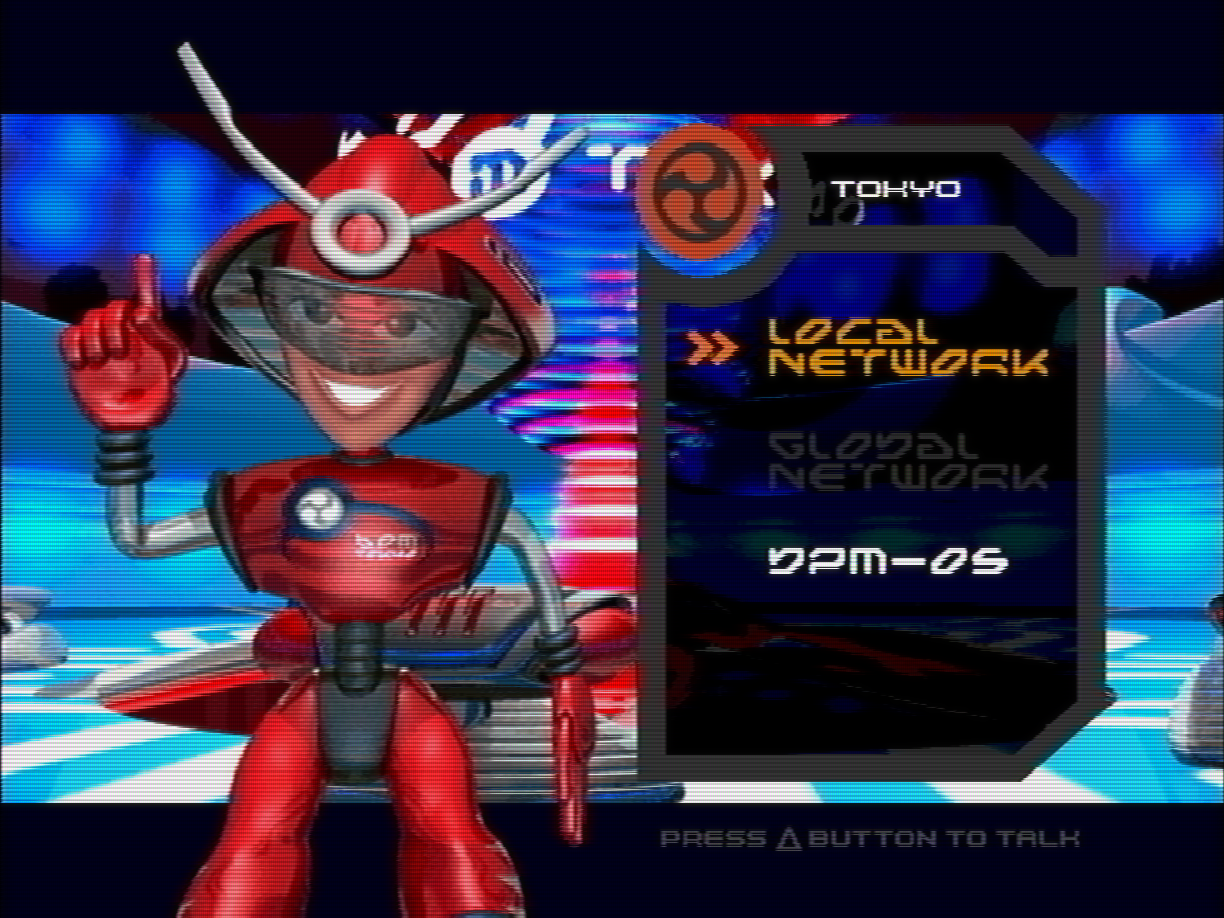
Or maybe not, brother.
If you are only interested in playing BPM to get through all of the levels and see the credits, then there's nothing here for you. Playing the game is merely a small hoop to jump through for the real appeal of BPM: the editor. I said that Beat Planet Music was a rhythm game, when in actuality, I probably should have said that it was a music game. I'm not being pedantic, there is an actual distinction here. The BPM editor is what you use to create your own songs, with additional samples being unlocked as you play through the main game. You go in, create your own synth loops, and then you can use them in your own custom stages.
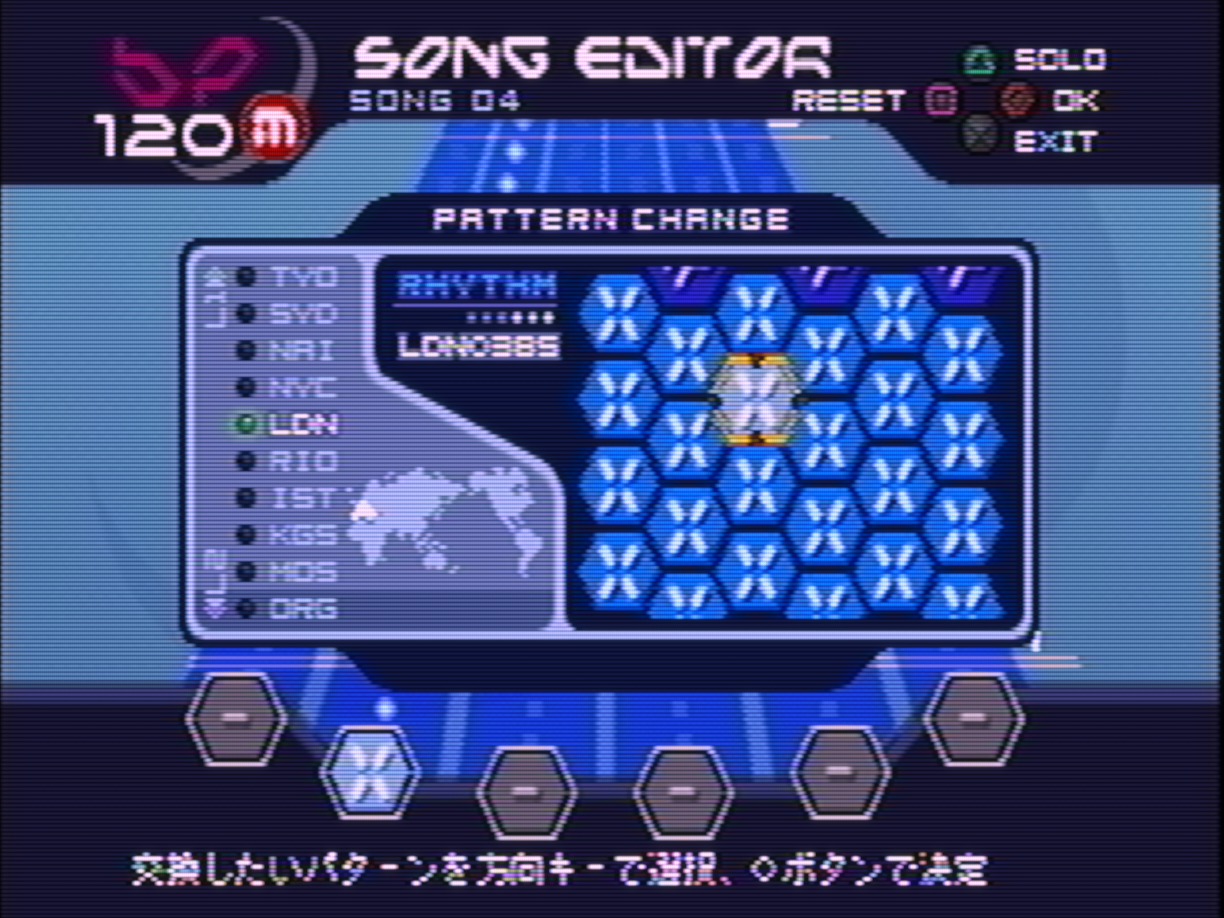
This is a pretty impressive little tool. You got all types of things you can do here: you've got your channel volume controls, reverb, panning, modulation, all of that. You can combine samples together to create your own sounds. There's even an option to take the game out of your Playstation and record samples off of a music CD, which I can't mess with because it will forever be a mystery as to which files will actually work with Duckstation. Obviously, this will not replace an actual synth, or a MIDI controller, or a DAW, but it's still a fun toy to play with. I went ahead and recorded some loops I made. One of my goals for this year is to learn how to actually make music, so I'll post this here so that, when I eventually become good, I can have a laugh at what I made:
Now, I admit that this has been a pretty dry write-up so far. Mostly because, as a game, Beat Planet Music isn't really all that good. It is basic in a bad way, lacking in anything remotely exciting that other rhythm games have done before and since. The "game" here was nothing more than a flimsy add-on for the in-game synthesizer.
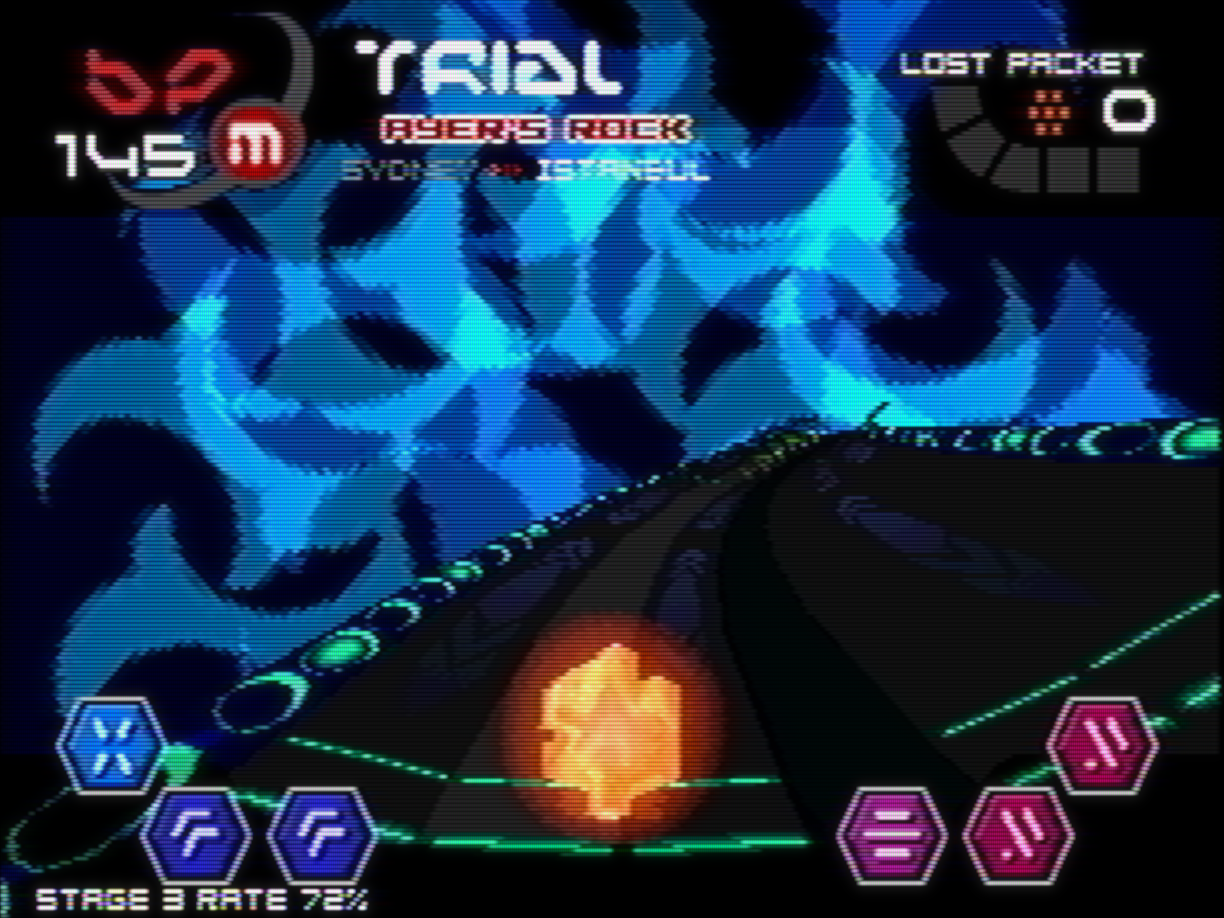
This does not matter. What matters is that this is a Playstation music game released in the year 2000, and do you know what that means? That means Jungle. That means Drum and Bass. That means the best kind of EDM. That means bright colors and plastic looking robots. That means that I get to be reminded once again that damn, we probably shouldn't have put all of our hopes and dreams into the new millenium. But at least the music is good and you can make your own.
Comments