
Cosmic Smash


Sega made so many games in the late 90s and early 2000s that shared a common theme: Peace. Harmony. Dreams of a better world. And having this dream in the coolest, most stylish way possible. January 2001, the last time you could feel positive about the world ever again, Sega released Cosmic Smash. Cosmic Smash is a game about a sleek digital being in a sleek digital world playing a sleek digital game of Squash. Or Breakout.
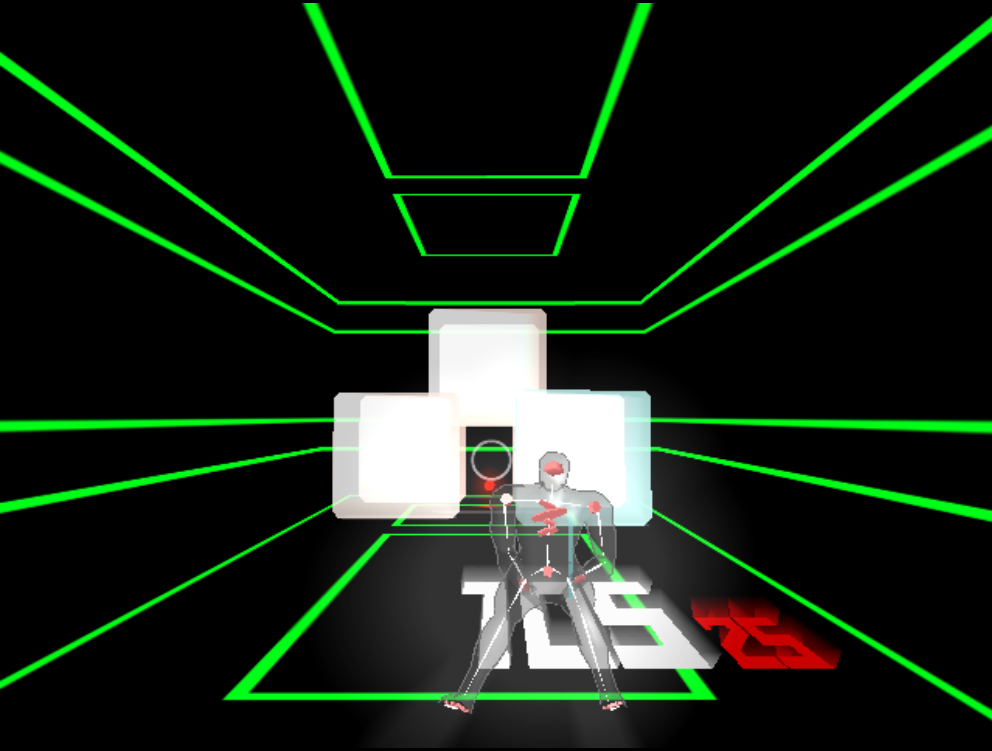

There is an extremely simple premise here: you have a racquet, and you have a ball. You hit the ball with the racquet to hit colored panels along the back wall of the court. Sometimes the panels move. Sometimes they're protected by indestructible panels. Things don't get much more complicated than that. The only thing that poses any threat to you is time. Time is constantly ticking down. It ticks down even faster when you use a Trick Shot: a special ability that can destroy an entire column of panels, and gives you a nice score bonus if you finish a level with one. So this otherwise relaxing one-person game of Arkanoid Squash is now a game about resource management. Trick shots cause you to lose time, but they take down panels faster than regular shots, so you might be good enough to use just enough time to get through a level, and get that time back when you start the next level (you get 20 seconds back on the clock by default). Or maybe you'll just play it safe, maybe even forgoing a bonus if things aren't going well, just to make it to the end of a route, giving up the 10 million point bonus you get for finishing every stage with a trick shot.
Routes. Much like another classic Sega arcade game, Outrun, Cosmic Smash has branching paths for you to take throughout the game. Each level takes place on the Cosmic Bus metro system. Unless you've memorized the system map, you won't actually know where you're going. The in-game map is incredibly zoomed in, only showing you a small number of locations at a time.


After a few runs of Cosmic Smash, it finally hit me. This game is a lot more similar to Outrun than I had realized. Probably more than Sega themselves realized. Cosmic Smash is a game about moving forward, going nowhere in particular, all while time itself threatens to end your experience prematurely. It is once again all about escapism, only it is now updated for a new era. Gone are the fancy Ferrari's and scenic American highways. In its place are anonymous avatars and digital networks. I'm not losing myself in an idealized United States anymore, I'm losing myself in the Internet. A silhouette of a human being in a facsimile of a subway tunnel playing a loose adaptation of a sport. It's cold, it's lonely, the time limit makes it stressful, and yet it is also oddly comforting. My time in the virtual world has me lost in gorgeous visuals and incredible music. For a while, I am cut off from the rest of the real world. Just me, a racquet, and an increasingly challenging series of rooms to test my physical skills in. A short burst of escapism on my Dreamcast.
Much like with Outrun, I have to ask myself what I am escaping from in this game about escapism. Why am I so at home retreating into this digital realm? Is it because I miss the old Sega? You know, the Sega that wasn't doing vibe-coded sequels to Crazy Taxi or making a game with a digital recreation of Tupac Shakur, a man who was murdered almost 30 years ago, and included in that game without the consent of his family, who have been trying to wrangle control of their dead brothers' name from executives and sell-out rappers?
Is it because I am desperate for this whole "Y2K" artstyle to come back? I mean, probably, given how often I say just that in so many other entries on this site. Or is it because I long for the time when I looked forward to what technology could do in the future, being too young to understand just how all this shit could be used for evil?
Or maybe I'm just fucking depressed again because everything sucks. Who knows?


The final act of Sega as an independent entity was their strongest. Their various development teams delivered creative highs, while the company itself was suffering financial lows. Like I mentioned at the beginning of this, so many of the games released during this time were all about hope. Games like Sonic Adventure that were all about friendship. Games like Phantasy Star Online, which encouraged people from all different walks of life to work together to accomplish a common goal. Then there was Cosmic Smash, a game that is just as bright and as colorful as the rest of Sega's output, but a far lonelier experience if you think about it for more than a few minutes. The Dreamcast really was this spectrum of emotion and humanity.
I just wish I had more time to experience it all.
Comments